
Creator-First Software Businesses: Guaranteed distribution

The startup landscape is evolving rapidly, with creator-driven businesses leading a new paradigm. While we've seen success stories like Kylie Cosmetics and MrBeast's Feastables in the physical product space, the real revolution is happening in software. Unlike physical goods, software products offer zero upfront costs, fast iteration cycles and unlimited scaling potential, allowing creators to leverage their influence to build and grow startups at an unprecedented pace.
Product/Problem-First vs Creator-First
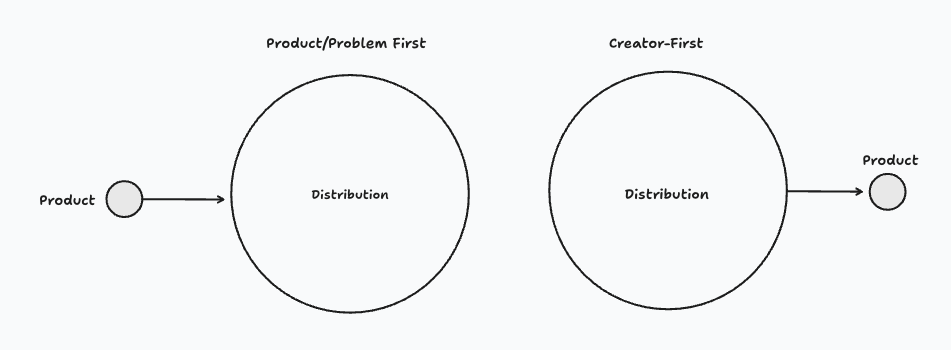
Product/Problem-First:
Start with a problem
Build product
Figure out distribution
Build and scale gradually
Creator-First:
Start with distribution (creators with loyal audiences)
Build product for the audience
Guarantee demand from day one
Build and scale rapidly
Example: Musicfy engaged 10,000 AI music enthusiasts before building their product, ensuring immediate demand upon launch.
Why This Shift is Happening
AI-Accelerated Development: Rapid prototyping combined with ready audience for testing
Trust in Creators: Authenticity and immediate credibility
Viral Growth Potential: Platforms like TikTok enable systematic, scalable content production
Strategies for Success
Borrowed Credibility
Creators as co-builders, not just marketers
Leverage established creators' trust and influence
Embedded Distribution
User acquisition through trusted creators from day one
Community-based, influence-driven growth
Strategic Scaling
High initial Customer Acquisition Cost (CAC) justified by guaranteed distribution
Delayed marketing spend until significant revenue milestones
Apps as trends
The sustainability of this model is debatable, drawing parallels to trends seen in e-commerce:
Apps are viewed more like fashion trends – constantly changing and evolving
Success is measured by immediate impact rather than longevity
Adaptability and trend alignment are prioritized over building long-lasting brands
Conclusion
The creator-first business model is reshaping how startups launch and scale. By leveraging creator influence, community trust, and rapid product iteration, these businesses can achieve unprecedented growth. While the long-term sustainability of individual ventures may vary, the model itself represents a significant shift in startup strategy, emphasizing immediate impact, community engagement, and adaptability in an ever-changing digital landscape.